


Page 13 - Dyslipidaemia_newsletter8_2024_Final
P. 13
REFLECTIONS
                                                                                                                   Dyslipidaemia
     Dyslipidaemia Global Newsletter #8 2024


     The authors highlight that there are unique considerations   to the fetus. Bempedoic acid is a newer lipid-lowering agent
     for pharmacotherapy during preconception, pregnancy, and   that is not recommended for use during pregnancy. There is
     lactation. Many lipid-lowering medications are contraindicated   limited experience with PCSK9i during pregnancy and they
                                                                                                                   Dyslipidaemia
     or require careful risk-benefit assessment in these contexts. The   should be used with caution. The safety of omega-3 fatty
     authors highlight that prepregnancy counselling is important,   acids in pregnancy women to treat lipid disorders remains
     especially in more high-risk patients.                     unclear; therefore, it should be used with caution both in
                                                                pregnancy and during lactation. Fibric acid derivatives also are
     Statins are generally recommended to be avoided in women   cautioned for use during pregnancy and in lactating woman.
     trying to conceive and during pregnancy, but since the FDA   It is recommended to wait five days after the final dose before
     removed the contraindication for statins during pregnancy   resuming breastfeeding. Given the lack of CVD benefit and
     in July 2021, they may be considered for high-risk women,   potential increased risk, niacin is no longer used as a treatment
     such as those with a history of ASCVD, HoFH, or severe     for lipid management for ASCVD prevention.
     heterozygous FH. Bile acid sequestrants are not absorbed
     systemically, making them a safer option for lowering LDL-C   Lipoprotein apheresis is approved during pregnancy and
     levels during pregnancy and lactation. Ezetimibe should only   considered safe for very high-risk women with known significant
     be considered if the potential benefits justify the potential risk   ASCVD or HoFH.


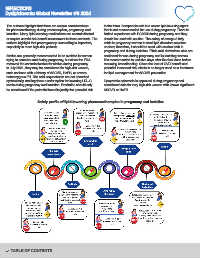
                        Safety profile of lipid-lowering pharmacotherapies in pregnancy and lactation


          TABLE OF CONTENTS

