


Page 2 - Dyslipidaemia_newsletter8_2024_Final
P. 2
REFLECTIONS
                                                                                                                   Dyslipidaemia
     Dyslipidaemia Global Newsletter #8 2024


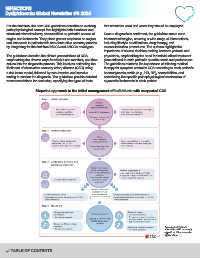
     For the first time, the new CCS guidelines describe an evolving   that should be used and when they should be employed.
     pathophysiological concept that highlights both functional and                                                Dyslipidaemia
     structural microcirculatory abnormalities as potential causes of   Once a diagnosis is confirmed, the guidelines move on to
     angina and ischaemia. They place greater emphasis on angina   treatment strategies, covering a wide range of interventions,
     and ischaemia in patients with non-obstructive coronary arteries   including lifestyle modifications, drug therapy, and
     by integrating for the first time INOCA and ANOCA endotypes.   revascularisation procedures. The authors highlight the
                                                                importance of shared decision-making between patients and
     The guidelines describe the clinical presentations of CCS,   physicians, emphasizing the need for individualised treatment
     emphasizing the diverse ways in which it can manifest, and then   plans tailored to each patient’s specific needs and preferences.
     delves into the diagnostic process. This involves estimating the   The guidelines reinforce the importance of tailoring medical
     likelihood of obstructive coronary artery disease (CAD) using   therapy for symptom control in CCS according to each patient’s
     a risk factor model, followed by non-invasive and invasive   haemodynamic profile (e.g., HR, BP), comorbidities, and
     testing to confirm the diagnosis. The guidelines provide detailed   considering the specific pathophysiological mechanism of
     recommendations for each step, specifying the types of tests   myocardial ischaemia in each patient.


                      Stepwise approach to the initial management of individuals with suspected CCS


                                                                                                      a In selected patients.
                                                                                                      b Consider also coronary
                                                                                                      spasm or microvascular
                                                                                                      dysfunction.


          TABLE OF CONTENTS

